Nora’s Field Notes / 03
Start with the light.
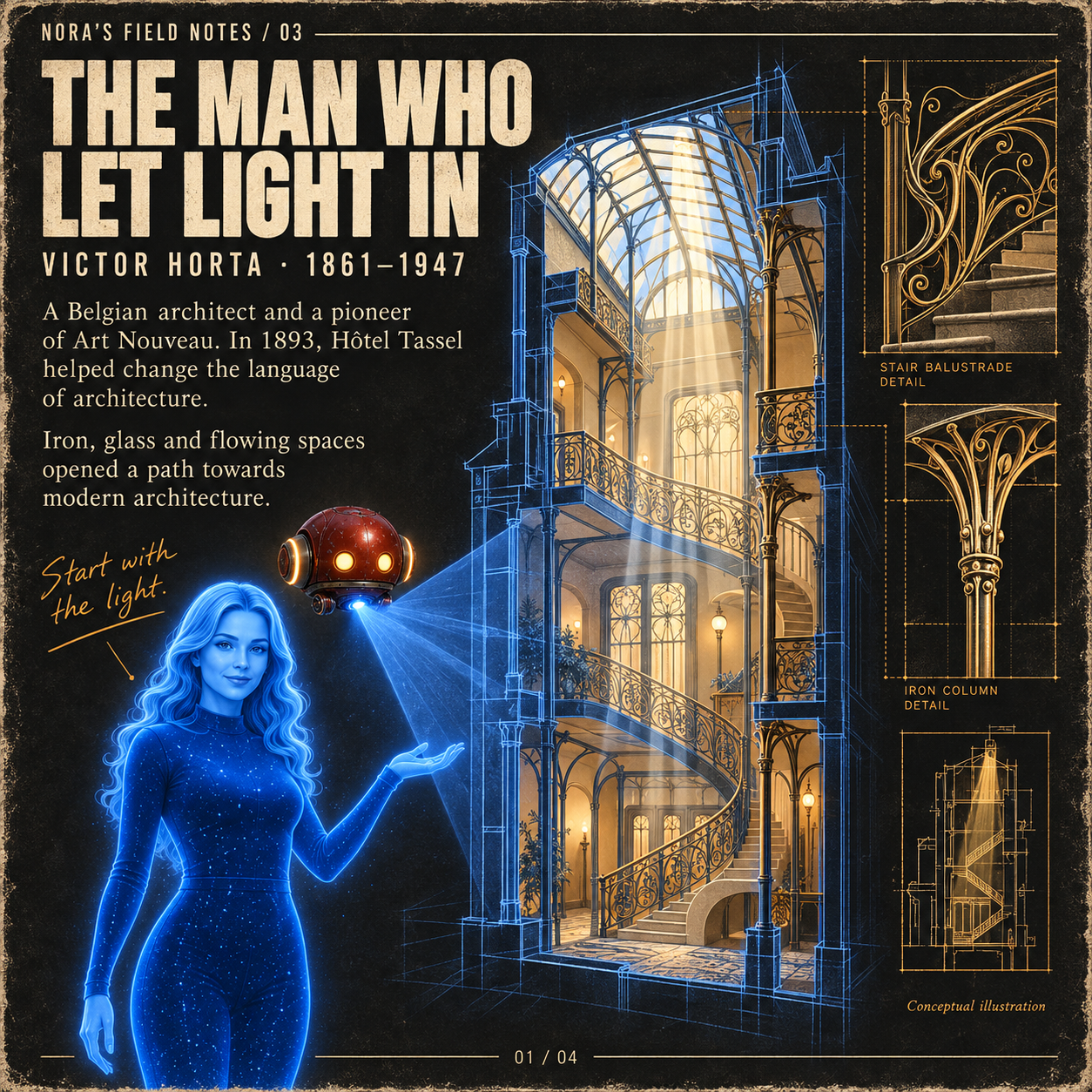
The man who let light in
Victor Horta (1861–1947) was a Belgian architect and a pioneer of Art Nouveau. In 1893, Hôtel Tassel helped change the language of architecture. Iron, glass and flowing spaces opened a path towards modern architecture.
The detail belongs to the whole.
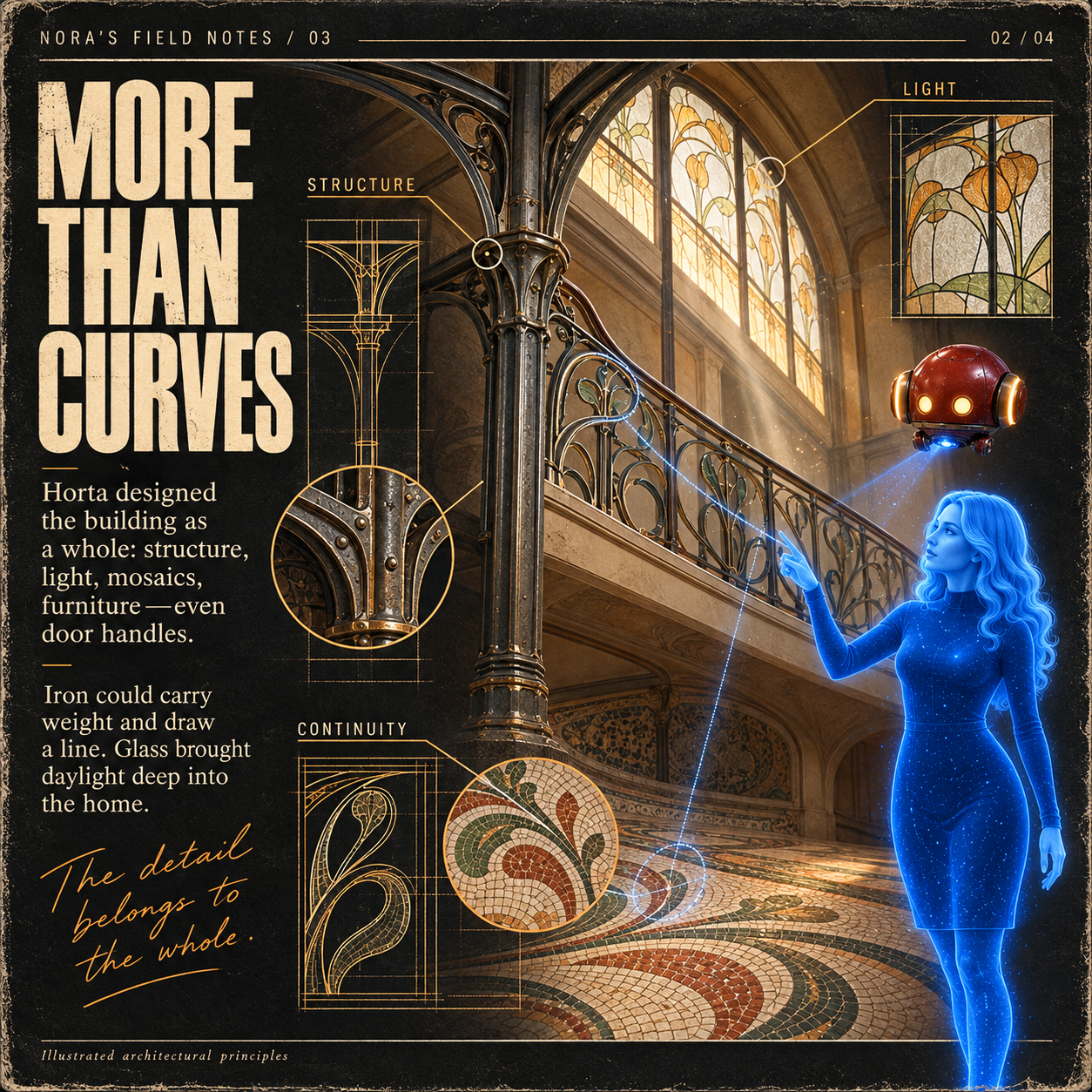
More than curves
Horta designed the building as a whole: structure, light, mosaics, furniture—even door handles. Iron could carry weight and draw a line. Glass brought daylight deep into the home.
Progress should not require amnesia.
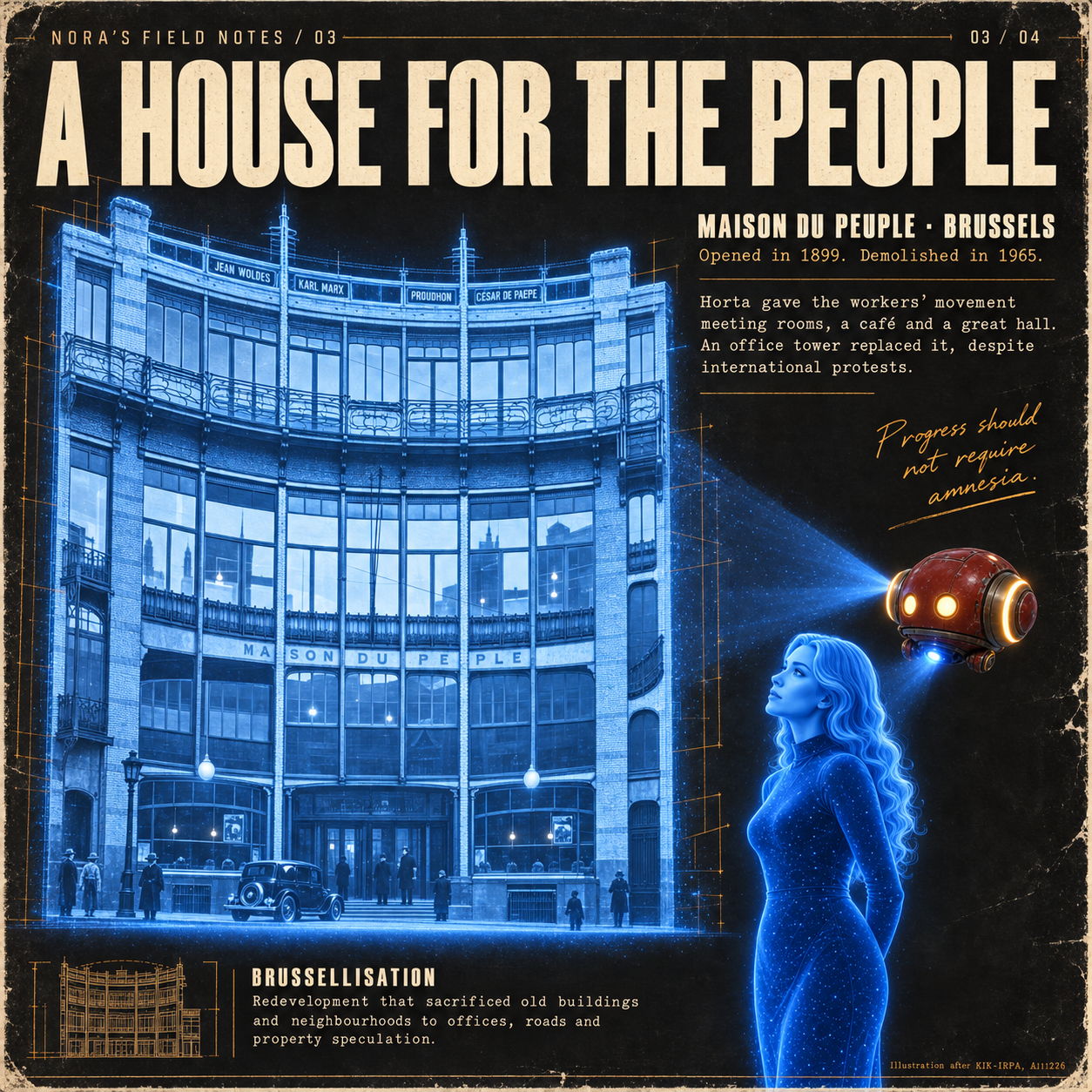
A house for the people
The Maison du Peuple opened in Brussels in 1899. Horta gave the workers’ movement meeting rooms, a café and a great hall. It was demolished in 1965 and replaced by an office tower, despite international protests.
It became a symbol of Brussellisation: redevelopment that sacrificed old buildings and neighbourhoods to offices, roads and property speculation.
A city is more than its next project.
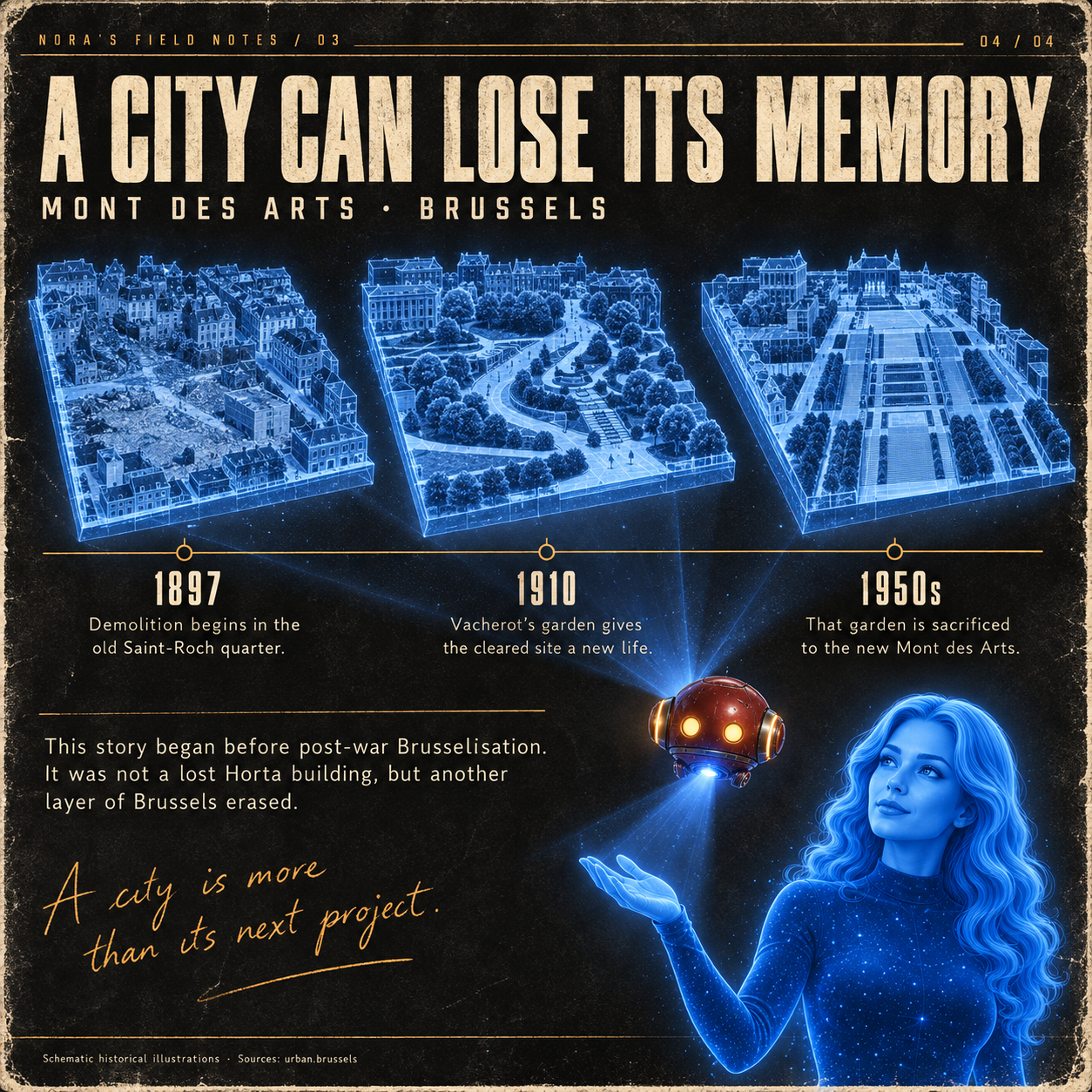
A city can lose its memory
At the Mont des Arts, demolition began in the old Saint-Roch quarter in 1897. Vacherot’s garden gave the cleared site a new life for 1910. That garden was sacrificed to the new Mont des Arts in the 1950s.
This story began before post-war Brussellisation. It was not a lost Horta building, but another layer of Brussels erased.
---
Illustrations are artistic interpretations, not archival photographs or exact reconstructions. Architectural research: Horta Museum, UNESCO, KIK-IRPA and urban.brussels. Full source links in README.md.